Spooky Hollow: A Fun and Spooky Display Font for Editorial Design
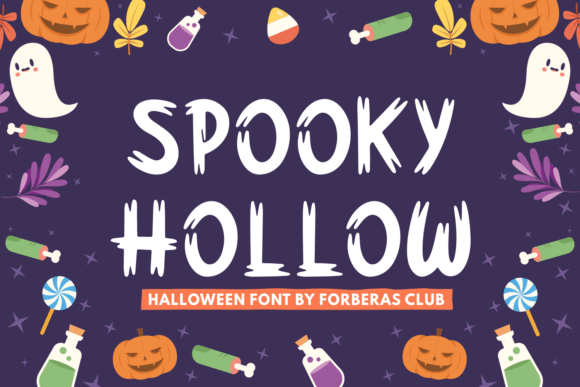
As a publisher and editorial designer who crafts blogs, digital magazines, and printable guides for creative audiences, I look for fonts that do more than just look good—they need to communicate tone instantly. That’s why Spooky Hollow stands out among display fonts: it’s not just decorative—it’s deliberately atmospheric. With its jagged serifs, uneven baseline, and subtly asymmetrical letterforms, Spooky Hollow delivers a playful yet unsettling energy—ideal for projects where mood is part of the message. It’s a display font built for impact, not extended reading, and it works best when paired with highly legible serif or sans serif fonts for body text.
Spooky Hollow for Halloween Blog Headers and Seasonal Newsletter Graphics
When your blog publishes seasonal content—like October recipe roundups, haunted house DIY guides, or spooky-themed lifestyle newsletters—Spooky Hollow gives headers immediate thematic resonance. Unlike generic “scary” fonts that rely on clichéd drips or bones, Spooky Hollow balances wit and eeriness, making it perfect for tone-aware brands. Use it at 36–60pt for email subject lines rendered as web-safe graphics, or as SVG-based headings in WordPress themes that support custom typography. Because Spooky Hollow is a display font, avoid using it below 24pt on screen—small sizes lose clarity on mobile, especially in newsletter clients like Mailchimp or Substack.
Spooky Hollow for Ebook Covers and Chapter Openers in Horror-Themed Publications
If you’re designing an indie horror ebook, a paranormal podcast companion guide, or a printable “Ghost Hunting Journal,” Spooky Hollow strengthens visual identity from the first glance. Its irregular rhythm and slightly distressed texture suggest analog charm—think vintage pulp covers or zine aesthetics—without sacrificing modern readability. For chapter openers, use Spooky Hollow in bold weight (if available) at 48–72pt over a muted background, then follow with a clean serif font like EB Garamond or Lora for body copy. This pairing supports hierarchy while keeping readers anchored. As a display font, Spooky Hollow isn’t meant for full-page text—but it *is* ideal for title pages, section dividers, and pull-quote callouts that punctuate narrative tension.
Spooky Hollow for Printable Guides, Workbooks, and Lead Magnets Targeting Horror Enthusiasts
Creative professionals building themed lead magnets—like “50 Halloween Party Game Ideas” or “The Ultimate Haunted Road Trip Planner”—need fonts that reinforce niche credibility. Spooky Hollow does exactly that: it signals genre fluency without alienating readers who appreciate craft over camp. When exporting PDFs for printables, embed Spooky Hollow to preserve fidelity across devices. Test output on both laser and inkjet printers—its thin strokes hold up well at 150+ DPI, but avoid ultra-light weights if printing on textured paper. As with all display fonts, limit usage to headlines, cover titles, and accent elements; pair with a neutral sans serif like Inter or Open Sans for instructions, bullet points, and captions.
Spooky Hollow for Digital Magazine Covers and Social Media Quote Graphics
In editorial design, cover typography must compete in crowded feeds—and Spooky Hollow delivers distinctiveness without sacrificing legibility. On Instagram or Pinterest, where vertical thumbnails dominate, Spooky Hollow shines at scale: its tall x-height and open counters remain readable even at thumbnail size. Use it for cover mastheads, issue subtitles (“October 2024: Tales from the Edge”), or quote overlays on dark backgrounds. Since Spooky Hollow is a display font, avoid stacking multiple lines of it in tight spaces—instead, set one powerful phrase per graphic and let negative space do the work. Always verify licensing: if you’re distributing a digital magazine commercially, ensure your Spooky Hollow license permits embedding in PDFs and redistribution in templates or subscriber-only downloads.
Spooky Hollow for Branding Consistency Across Horror-Themed Content Series
For creators building long-term content brands—like a monthly “Cryptid Chronicles” newsletter or a “Witchy Wellness” ebook series—typographic consistency builds recognition faster than color alone. Spooky Hollow functions as a reliable signature element: use it identically across all cover art, social banners, and email footers. Its fun-and-spooky duality appeals to Gen Z and millennial audiences who value irony and authenticity in equal measure. Pair it with a warm, humanist sans serif (e.g., Poppins or Manrope) for navigation menus and body copy—this contrast reinforces Spooky Hollow’s role as a deliberate, intentional choice—not just a Halloween gimmick. Check whether the Spooky Hollow package includes alternate glyphs or stylistic sets; subtle variations (like a swash ‘Q’ or ghostly dot accents) add depth to recurring branding without overcomplicating layout.
Spooky Hollow for Editorial Layouts Requiring Mood-Driven Visual Hierarchy
In editorial design, hierarchy isn’t just about size—it’s about emotional pacing. Spooky Hollow excels in guiding attention through tonal contrast: use it for section headers that introduce eerie anecdotes, for pull quotes lifted from interview transcripts with paranormal investigators, or for sidebar titles in a “Myth vs. Fact” comparison chart. Because it’s a display font, never use Spooky Hollow for body copy, captions under photos, or UI labels—those demand neutrality and speed. Instead, deploy it where you want the reader to pause, lean in, and feel the atmosphere shift. In print layouts, test line spacing carefully: 1.3–1.4x is optimal for larger sizes, preventing letters from visually crowding despite their expressive shapes.
Spooky Hollow for Commercial Fonts Licensing in Client Projects and Paid Templates
If you’re a freelance designer delivering branded assets—like a horror-themed Shopify theme, Canva template pack, or Notion course dashboard—you’ll need clarity on licensing. Spooky Hollow is a commercial font, and most licenses permit use in client deliverables, provided you’re not reselling the font file itself. For digital products sold on Etsy or Gumroad (e.g., printable spell journals or tarot workbook kits), confirm whether your license covers unlimited end-user distribution. Some versions include webfont files—ideal for embedded headings in hosted newsletters or landing pages—but always check WOFF/WOFF2 support and CORS restrictions. As a display font, Spooky Hollow adds premium perception to paid content—just ensure your license matches your distribution model.